
Introduction
Psychology is one of the most competitive and popular degrees in the UK, attracting thousands of domestic and international students every year. Among the top choices, the University of Edinburgh stands out as a world-class institution with a strong academic reputation in psychological sciences.
But how does it compare with other leading UK universities such as University of Oxford, University of Cambridge, UCL (University College London), King’s College London, and the University of Manchester?
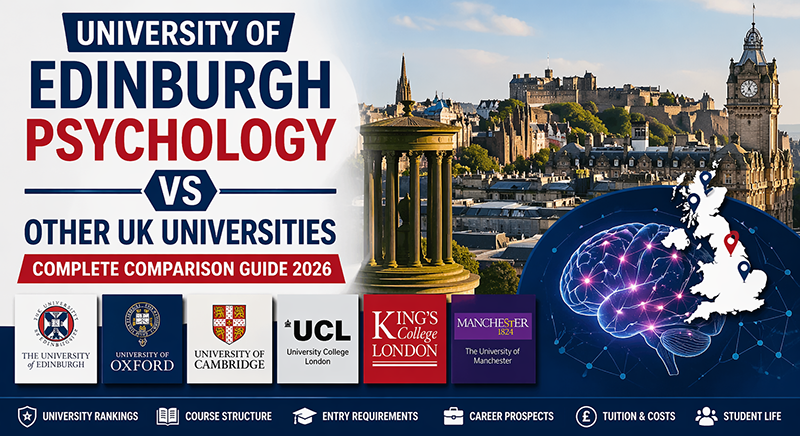
This guide provides a complete breakdown of University of Edinburgh Psychology vs other UK universities, covering rankings, course structure, admissions, student experience, and career outcomes.
1. Overview of Psychology at UK Universities
The UK is home to some of the world’s best psychology programs. Most universities follow the BPS (British Psychological Society) accreditation system, ensuring high academic and professional standards.
Common psychology specializations include:
- Cognitive Psychology
- Clinical Psychology
- Developmental Psychology
- Neuroscience
- Social Psychology
- Forensic Psychology
However, each university differs in teaching style, research strength, and industry connections.
2. University of Edinburgh Psychology Overview
The University of Edinburgh Psychology Department is part of the School of Philosophy, Psychology and Language Sciences.
Key Highlights:
- Global Top 20–30 ranking for Psychology (varies by ranking system)
- Strong focus on cognitive neuroscience and brain research
- Research-led teaching approach
- Access to advanced labs and neuroimaging facilities
- Highly international student environment
Why Students Choose Edinburgh:
- Strong academic reputation worldwide
- Beautiful historic city with student-friendly lifestyle
- Excellent research opportunities
- High employability outcomes
3. University of Edinburgh Psychology Course Structure
The psychology degree at Edinburgh is typically structured as:
Year 1–2:
- Introduction to Psychology
- Cognitive Processes
- Biological Psychology
- Research Methods & Statistics
Year 3:
- Advanced Psychology Topics
- Optional modules (clinical, developmental, neuroscience)
Year 4 (Honours Year):
- Independent research dissertation
- Specialized advanced modules
The emphasis is strongly research-oriented, preparing students for postgraduate study or academic careers.
4. Entry Requirements Comparison
University of Edinburgh
- A-levels: AAA–AAB
- IB: 37–38 points
- Psychology not required but science preferred
- Strong personal statement + academic references
University of Oxford
- A*AA or higher
- TSA test required
- Highly competitive interview process
University of Cambridge
- AAA typical offer
- Interview-heavy selection
- Strong focus on mathematics/statistics ability
UCL (University College London)
- AAB–AAA
- Strong emphasis on science/maths background
King’s College London
- AAB
- Psychology-focused personal statement essential
University of Manchester
- ABB–AAB
- More accessible compared to top-tier universities
Conclusion: Edinburgh sits in the highly competitive but slightly more accessible tier compared to Oxford and Cambridge.
5. University Rankings Comparison (Psychology)
Approximate global psychology rankings:
| University | Psychology Ranking Strength |
|---|---|
| Oxford | Top 5 globally |
| Cambridge | Top 5–10 |
| UCL | Top 10–15 |
| King’s College London | Top 20 |
| Edinburgh | Top 20–30 |
| Manchester | Top 30–50 |
Edinburgh consistently ranks among the top psychology schools in the UK, but slightly below Oxbridge and UCL in research output.
6. Teaching Style Differences
Edinburgh
- Research-led learning
- Strong focus on neuroscience and cognition
- Independent study emphasized
Oxford & Cambridge
- Tutorial system (small group teaching)
- Extremely intensive academic workload
UCL
- Balanced theory + lab-based learning
- Strong clinical psychology focus
King’s College London
- Strong mental health and clinical psychology emphasis
- Located in central London hospitals & institutes
Manchester
- More flexible learning structure
- Larger lecture-based teaching model
7. Research Opportunities
Research strength is where Edinburgh truly stands out.
Edinburgh Advantages:
- Centre for Cognitive Ageing and Cognitive Epidemiology
- Brain imaging and neuroscience labs
- Strong AI + psychology integration research
- High publication output in cognitive science
Compared to Others:
- Oxford/Cambridge: stronger overall prestige
- UCL: stronger clinical psychology research
- King’s: stronger mental health and psychiatry links
- Manchester: more general research scope
Edinburgh is especially strong in cognitive neuroscience and experimental psychology.
8. Student Experience Comparison
Edinburgh Student Life
- Historic city with modern student culture
- Moderate living costs compared to London
- Strong international community
- High academic pressure but supportive environment
London Universities (UCL & King’s)
- High cost of living
- Strong industry exposure
- More internship opportunities
Oxford & Cambridge
- Highly traditional academic lifestyle
- Intense workload
- College-based community system
Manchester
- Lively student city
- Affordable lifestyle
- Balanced academic pressure
9. Career Prospects After Psychology Degree
Graduates from all top UK universities have strong career outcomes, but differences exist:
University of Edinburgh Graduates:
- Clinical psychology (postgraduate required)
- Neuroscience research roles
- Data science and analytics
- UX research
- Education and social services
Oxford & Cambridge:
- Higher academic and research career placement
- Strong postgraduate funding opportunities
UCL & King’s:
- Strong healthcare and NHS-linked careers
- Clinical psychology pipelines
Manchester:
- Business, HR, marketing, and general psychology roles
Edinburgh is especially strong in research, neuroscience, and analytical careers.
10. Cost of Study Comparison
Tuition Fees (International Students):
- Edinburgh: ~£28,000–£35,000/year
- Oxford/Cambridge: ~£30,000–£40,000/year
- UCL/KCL: ~£29,000–£38,000/year
- Manchester: ~£25,000–£32,000/year
Living Costs:
- Edinburgh: Moderate (~£900–£1,300/month)
- London: High (~£1,300–£2,000/month)
- Manchester: Lower (~£800–£1,200/month)
Edinburgh offers a balanced cost-to-quality ratio.
11. University of Edinburgh vs Other UK Universities (Summary Table)
| Factor | Edinburgh | Oxford | Cambridge | UCL | King’s | Manchester |
|---|---|---|---|---|---|---|
| Academic Prestige | High | Very High | Very High | High | High | Medium-High |
| Research Strength | Very Strong | Elite | Elite | Very Strong | Strong | Medium |
| Entry Difficulty | High | Very High | Very High | High | Medium-High | Medium |
| Student Life | Excellent | Traditional | Traditional | Urban | Urban | Vibrant |
| Career Outcomes | Strong | Excellent | Excellent | Strong | Strong | Good |
12. Is University of Edinburgh Psychology Worth It?
Yes—especially if you are interested in:
- Cognitive neuroscience
- Research-focused psychology
- International academic exposure
- Strong postgraduate opportunities
However:
- If you want elite academic prestige → Oxford/Cambridge may be better
- If you want clinical NHS pathways → King’s College London is strong
- If you want London industry exposure → UCL is ideal
Edinburgh is best described as a global top-tier research university with balanced student life and strong psychology reputation.
FAQ
1. Is University of Edinburgh good for psychology?
Yes, it is one of the top psychology schools in the UK, especially strong in cognitive neuroscience.
2. What is Edinburgh psychology ranking?
It typically ranks within the top 20–30 psychology departments globally.
3. Is psychology at Edinburgh hard?
Yes, it is academically challenging with strong emphasis on statistics and research.
4. Is Edinburgh better than UCL for psychology?
UCL is slightly stronger in clinical psychology, while Edinburgh is stronger in cognitive neuroscience.
5. What jobs can I get with Edinburgh psychology degree?
Common paths include research, UX design, data analysis, education, and postgraduate clinical psychology.
6. Do I need maths for psychology at Edinburgh?
Yes, statistics and data analysis are important components of the course.
RELATED ARTICLES:
1. University of Edinburgh Acceptance Rate Explained
2. Is a University of Edinburgh Masters Degree Worth It? Full Guide
3. Edinburgh University Mastercard Scholarship Benefits & Tips