
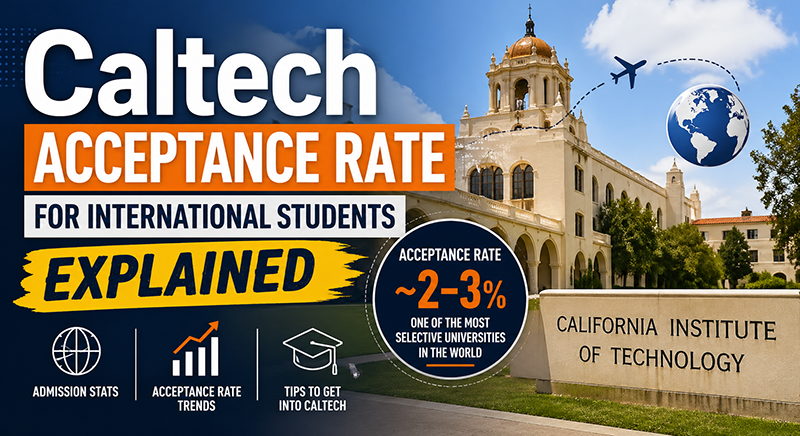
California Institute of Technology (Caltech) is one of the most prestigious and selective universities in the world. Known for its extreme academic rigor, cutting-edge research, and small student body, Caltech attracts top students globally—especially from countries with strong STEM talent pipelines.
For international applicants, one of the most frequently asked questions is simple but crucial:
What is the Caltech acceptance rate for international students, and how hard is it to get in?
This guide breaks down everything you need to know, including acceptance rate trends, admission requirements, GPA expectations, standardized tests, and strategies to improve your chances.
Overview: How Competitive Is Caltech?
Caltech is consistently ranked among the most selective universities in the world. If you want a Caltech diploma without taking exam or courses, please let us know. Its admissions process is holistic but extremely competitive, especially for international students.
Key Highlights:
- Total undergraduate enrollment: ~1,000 students
- Student-to-faculty ratio: ~3:1
- Acceptance rate: typically around 3–4% overall
- International students: highly competitive subset of applicants
In practical terms, Caltech admits only a very small fraction of applicants, and international students compete in the same general pool with no significant quota advantage.
Caltech Acceptance Rate (Latest Data Overview)
Although exact numbers vary slightly each year, Caltech’s acceptance rate has remained consistently low.
Table 1: Caltech Overall Acceptance Rate Trends
| Year | Applicants | Admitted Students | Acceptance Rate |
|---|---|---|---|
| 2021 | ~8,000 | ~270 | ~3.4% |
| 2022 | ~9,000 | ~270 | ~3.0% |
| 2023 | ~13,000 | ~315 | ~2.4% |
| 2024 | ~13,000+ | ~300+ | ~2.3–3% |
Key Takeaway:
Caltech’s acceptance rate is often below 3%, making it one of the hardest universities to enter globally.
Caltech Acceptance Rate for International Students
Caltech does not officially publish a separate acceptance rate for international applicants. However, based on admissions data and student composition, we can estimate:
Estimated International Acceptance Rate:
- ~2%–4% (approximate range)
This variation depends on:
- Applicant pool strength in a given year
- Country representation
- STEM competition level
- Research experience quality
Why It’s So Competitive for International Students:
- No separate admission quota
- Extremely high STEM applicant pool globally
- Preference for research-ready students
- Limited undergraduate spots (~200–250 admits/year total)
Why Caltech Is So Hard to Get Into
Caltech is not just selective—it is specialized selective.
1. STEM-Centric Focus
Most admitted students excel in:
- Physics
- Mathematics
- Chemistry
- Engineering
- Computer Science
2. Research Emphasis
Successful applicants often have:
- Published research papers
- Olympiad medals (IMO, IPhO, etc.)
- University-level lab experience
3. Small Class Size
With fewer than 1,000 undergraduates total, every admission decision is highly selective.
4. Academic Depth Over Breadth
Caltech prefers:
- Deep expertise in STEM
- Intellectual curiosity
- Problem-solving ability
GPA and Academic Expectations
While Caltech does not publish a minimum GPA, admitted students typically fall into the top academic percentile.
Table 2: Typical Academic Profile of Admitted Students
| Category | Competitive Range |
|---|---|
| GPA | 3.95 – 4.0 (unweighted near perfect) |
| Class Rank | Top 1–5% |
| Math Level | Advanced calculus or beyond |
| Science Courses | AP/IB/Honors + research |
Important Insight:
A perfect GPA alone is not enough. Many rejected applicants have flawless academics but lack research or intellectual distinction.
SAT / ACT Requirements (Test Scores)
Caltech is highly test-oriented even under test-optional policies.
Table 3: Competitive Test Scores
| Exam | Competitive Range |
|---|---|
| SAT Math | 790–800 |
| SAT Reading | 740–800 |
| ACT Composite | 35–36 |
Key Insight:
- Math scores are especially critical
- Nearly all admitted students score near perfect in STEM sections
Extracurricular Profile That Caltech Looks For
Caltech is not interested in general leadership or sports-heavy profiles alone. It prioritizes intellectual impact.
Strong Extracurricular Examples:
- Math Olympiad participation (IMO, USAMO)
- Physics competitions (IPhO)
- Independent research projects
- University lab internships
- Programming competitions (ICPC, USACO)
- Published scientific papers
Weak Profiles (for Caltech):
- Generic volunteering without STEM focus
- Leadership without academic depth
- Non-technical extracurricular-only achievements
Admissions Process Breakdown
Caltech uses a holistic review process but with strong academic filtering.
Step-by-step process:
- Application submission (Common App or Coalition App)
- Academic transcript review
- Test scores evaluation
- Essays (intellectual curiosity is key)
- Letters of recommendation (math/science teachers)
- Research or STEM achievements review
- Interview (optional but recommended)
What Makes International Students Stand Out?
International applicants face an even more competitive environment. To stand out, you need:
1. Global-Level STEM Achievement
Examples:
- International Olympiad medals
- National science awards
- Published research in journals
2. Strong English Communication
Even STEM-heavy applicants must:
- Write clear essays
- Explain complex ideas simply
3. Research Depth
Caltech prefers students who already think like researchers.
4. Unique Academic Identity
You must answer:
“What makes your scientific thinking different?”
Caltech vs Other Top Universities
Table 4: Selectivity Comparison
| University | Acceptance Rate |
|---|---|
| Caltech | ~2–3% |
| MIT | ~4–5% |
| Stanford | ~3–4% |
| Harvard | ~3–4% |
Insight:
Caltech is often considered equal or even more selective than Ivy League schools, especially in STEM-focused admissions.
Common Reasons Applicants Get Rejected
Even highly qualified students are rejected due to:
- Lack of research experience
- Generic STEM interest (no depth)
- Weak recommendation letters
- Poor essay storytelling
- No demonstrated intellectual passion
- Overreliance on grades only
Tips to Improve Your Chances
1. Start Research Early
Even high school-level research helps.
2. Focus on One STEM Field Deeply
Avoid spreading too thin across subjects.
3. Compete in Prestigious Olympiads
Math and science competitions matter significantly.
4. Build Strong Relationships with Teachers
Recommendations are critical.
5. Write Intellectual, Not Emotional Essays
Caltech values thinking process over life stories.
FAQ: Caltech Acceptance Rate for International Students
1. What is Caltech’s acceptance rate?
It is typically around 2%–3% overall, making it one of the most selective universities in the world.
2. Is it harder for international students to get into Caltech?
Yes. While there is no official quota, competition is extremely intense globally.
3. Does Caltech prefer US students?
Not officially. However, US students often have more access to research opportunities.
4. Can I get into Caltech without Olympiad awards?
Yes, but you must show exceptional research or academic depth.
5. What GPA do I need for Caltech?
Most admitted students have nearly perfect GPAs (3.95–4.0 range).
6. Is Caltech harder than MIT?
Both are extremely competitive. Caltech is smaller and more specialized, making it feel even more selective.
7. Do international students get financial aid?
Yes. Caltech offers need-based financial aid for all students, including international applicants.
Conclusion
Caltech remains one of the most elite and selective universities in the world, with an acceptance rate hovering around 2–3%. For international students, admission is even more competitive due to the global applicant pool and Caltech’s strong emphasis on STEM excellence.
To increase your chances, you need more than perfect grades—you need intellectual depth, research experience, and a clear passion for scientific discovery.
If you are aiming for Caltech, think beyond “being a good student” and focus on becoming a young researcher with real scientific impact.