
1. Introduction
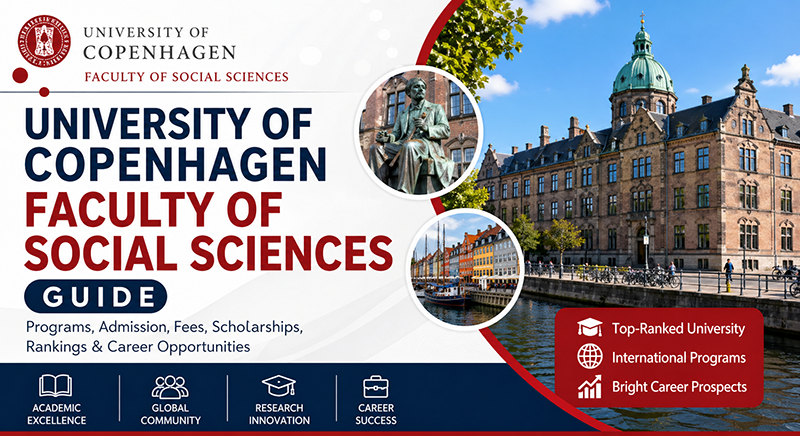
The University of Copenhagen Faculty of Social Sciences is one of Europe’s leading centers for research and education in fields such as economics, political science, sociology, and psychology. Located in the vibrant city of Copenhagen, this faculty attracts students from around the world who seek high-quality education combined with strong career prospects.
This guide provides a complete overview of everything you need to know—from programs and admissions to fees and job opportunities.
2. About the Faculty of Social Sciences
The University of Copenhagen is Denmark’s oldest university, founded in 1479. Its Faculty of Social Sciences is known for combining academic excellence with real-world relevance.
Key Departments
- Economics
- Political Science
- Sociology
- Psychology
- Anthropology
The faculty emphasizes interdisciplinary learning and encourages students to engage with real-world societal challenges such as globalization, inequality, and sustainability.
3. Why Choose the Faculty of Social Sciences
1. Global Reputation
The University of Copenhagen consistently ranks among the top universities in Europe.
2. Research Excellence
The faculty is known for cutting-edge research in social and behavioral sciences.
3. International Environment
Courses are offered in English, attracting a diverse student population.
4. Career Opportunities
Graduates are highly employable across sectors such as government, NGOs, and multinational corporations.
5. Location Advantage
Living in Copenhagen offers a high quality of life, safety, and access to global opportunities.
4. Programs and Degrees Offered
The faculty offers a wide range of undergraduate, master’s, and PhD programs.
Popular Bachelor’s Programs
- Bachelor in Economics
- Bachelor in Political Science
- Bachelor in Sociology
Popular Master’s Programs
- MSc in Economics
- MSc in Political Science
- MSc in Social Data Science
- MSc in Psychology
Program Overview Table
| Level | Programs Available | Duration |
|---|---|---|
| Bachelor’s | Economics, Sociology, Political Science | 3 years |
| Master’s | Economics, Data Science, Psychology | 2 years |
| PhD | Various Social Science Fields | 3–5 years |
These programs are designed to combine theory with practical skills, ensuring graduates are job-ready.
5. Admission Requirements
Admission standards are competitive, especially for international students.
Bachelor’s Requirements
- High school diploma equivalent
- English proficiency (IELTS/TOEFL)
- Strong academic record
Master’s Requirements
- Relevant bachelor’s degree
- English language test scores
- Statement of purpose
Typical Requirements Table
| Requirement | Bachelor’s | Master’s |
|---|---|---|
| Academic Degree | Yes | Yes |
| English Test | Yes | Yes |
| Motivation Letter | Sometimes | Yes |
| CV | No | Yes |
6. Tuition Fees and Scholarships
Tuition Fees
- EU/EEA students: Free
- Non-EU students: €10,000–€17,000 per year
Scholarships
- Danish Government Scholarships
- University-specific grants
- External funding options
These scholarships can significantly reduce the financial burden for international students.
7. Rankings and Reputation
The University of Copenhagen is consistently ranked among the top universities globally.
Ranking Highlights
- Top 100 worldwide (QS Rankings)
- Strong performance in social sciences
- Highly cited research output
This reputation enhances the value of degrees obtained from the faculty.
8. Student Life in Copenhagen
Studying in Copenhagen offers a unique experience.
Highlights
- Safe and student-friendly city
- Excellent public transportation
- Vibrant cultural scene
- Strong focus on sustainability
Students enjoy a balanced lifestyle with access to both academic and social opportunities.
9. Career Opportunities and Outcomes
Graduates from the Faculty of Social Sciences have excellent career prospects.
Common Career Paths
- Economist
- Policy Analyst
- Data Analyst
- Consultant
- Researcher
Top Employers
- Government agencies
- International organizations
- Private sector companies
Career Outcomes Table
| Field | Job Roles | Average Demand |
|---|---|---|
| Economics | Analyst, Consultant | High |
| Political Science | Policy Advisor | High |
| Sociology | Researcher, Social Worker | Medium |
| Psychology | Counselor, Analyst | High |
10. How to Apply
Application Steps
- Choose your program
- Check eligibility requirements
- Prepare documents
- Apply through the official portal
- Await admission decision
Application Timeline
- Fall intake: Applications open in January
- Deadline: March–April
Early preparation is highly recommended.
11. Pros and Cons
Pros
- Top-tier education
- Strong global reputation
- Excellent career outcomes
- International environment
Cons
- High cost of living
- Competitive admissions
- Limited scholarships for non-EU students
12. FAQs
1. Is the University of Copenhagen Faculty of Social Sciences good?
Yes, it is one of Europe’s top faculties with strong academic and research credentials.
2. Are programs taught in English?
Many master’s programs are fully taught in English.
3. What GPA is required?
A strong academic record equivalent to a B+ or higher is typically required.
4. Is Copenhagen expensive for students?
Yes, the cost of living is relatively high, but quality of life is excellent.
5. Can international students work while studying?
Yes, students are allowed to work part-time under Danish regulations.
13. Conclusion
The University of Copenhagen Faculty of Social Sciences offers a world-class education in one of Europe’s most dynamic cities. With strong academic programs, excellent career outcomes, and a global reputation, it is an ideal choice for students interested in social sciences.
Whether you aim to become an economist, policymaker, or researcher, this faculty provides the tools and opportunities needed for success.