Introduction
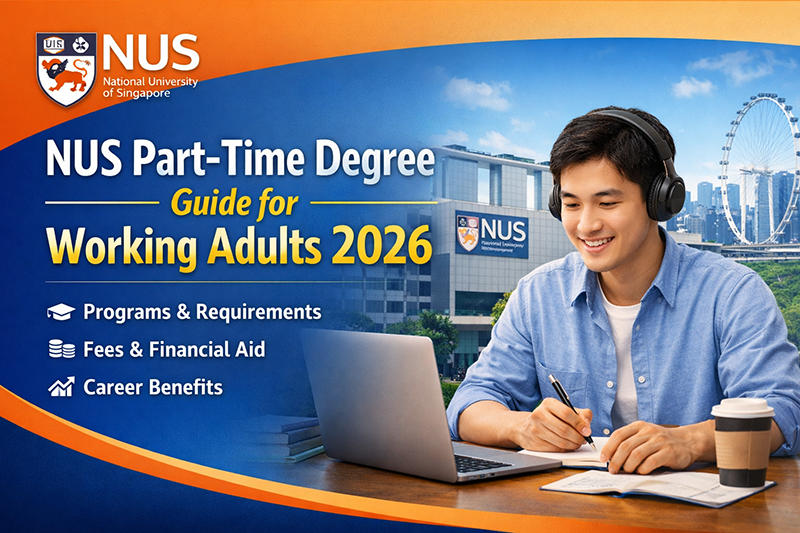
Balancing a full-time job while pursuing higher education can feel like a logistical nightmare—but it doesn’t have to be. The National University of Singapore (NUS) offers flexible part-time degree programs designed specifically for working professionals who want to upgrade their qualifications without sacrificing their careers.
In this comprehensive guide, you’ll learn everything about NUS part-time degrees—from admission requirements and tuition fees to program options, application tips, and career outcomes.
Whether you’re a mid-career professional, a fresh diploma holder, or someone looking to pivot industries, this guide will help you decide if a part-time degree at NUS is the right move.
Keyword Strategy
| Primary Keywords | Secondary Keywords | Long-Tail Keywords |
|---|---|---|
| NUS part-time degree | NUS adult education | NUS part-time degree for working adults |
| NUS continuing education | part-time degree Singapore | how to apply NUS part-time degree |
| NUS degree programs | NUS flexible study options | NUS part-time vs full-time degree |
| NUS application requirements | NUS fees and financial aid | is NUS part-time degree worth it |
What Is an NUS Part-Time Degree?
A part-time degree at NUS allows students to take fewer modules per semester compared to full-time students. Classes are typically scheduled in the evenings or weekends, making it easier for working adults to attend.
These programs are often offered through the NUS School of Continuing and Lifelong Education, which focuses on adult learners and continuing education.
Key Features:
- Flexible class schedules
- Extended completion timelines (3–6 years)
- Industry-relevant curriculum
- Access to NUS faculty and resources
Why Choose NUS for a Part-Time Degree?
Choosing NUS isn’t just about prestige—it’s about long-term value.
1. Global Reputation
NUS consistently ranks among the top universities worldwide, making your degree highly respected.
2. Career Advancement
Employers value candidates who can balance work and study, demonstrating discipline and ambition.
3. Networking Opportunities
You’ll study alongside professionals from diverse industries, expanding your professional network.
4. Flexible Learning
Programs are designed to accommodate busy schedules, making it easier to continue working.
Popular NUS Part-Time Degree Programs
While offerings may vary, here are some common areas available:
| Field of Study | Example Programs | Career Paths |
|---|---|---|
| Business | Business Administration | Management, Marketing, Consulting |
| Computing | Information Systems, Computer Science | IT, Data Analysis, Software Dev |
| Engineering | Electrical, Mechanical Engineering | Engineering, Manufacturing |
| Social Sciences | Economics, Sociology | Policy, Research, HR |
Some programs may be offered in collaboration with institutions like the NUS Business School.
Admission Requirements
Admission criteria vary by program, but generally include:
Basic Requirements:
- A diploma or equivalent qualification
- Relevant work experience (often preferred)
- English language proficiency
Additional Considerations:
- Entrance tests (for some programs)
- Interviews or written assessments
Quick Overview Table
| Requirement | Details |
|---|---|
| Academic Qualification | Diploma or equivalent |
| Work Experience | Preferred (1–3 years) |
| English Proficiency | IELTS/TOEFL (if applicable) |
| Application Materials | CV, transcripts, personal statement |
NUS Part-Time Degree Fees
Tuition fees depend on the program and whether you’re a local or international student.
Estimated Fee Range:
| Category | Estimated Cost (SGD) |
|---|---|
| Singapore Citizens | 8,000 – 15,000 total |
| Permanent Residents | 12,000 – 25,000 total |
| International Students | 20,000 – 40,000 total |
Financial Aid and Subsidies
NUS offers various financial support options:
- Government subsidies (for eligible students)
- Installment payment plans
- Scholarships and bursaries
Programs under SCALE may also provide subsidies aligned with Singapore’s SkillsFuture initiatives.
How to Apply for an NUS Part-Time Degree
Step-by-Step Process:
- Choose your preferred program
- Check eligibility requirements
- Prepare application documents
- Submit your application online
- Attend interview (if required)
- Receive admission offer
Application Timeline
| Stage | Timeline |
|---|---|
| Application Opens | Typically twice a year |
| Review Period | 4–8 weeks |
| Intake | January or August |
NUS Part-Time vs Full-Time Degree
| Aspect | Part-Time Degree | Full-Time Degree |
|---|---|---|
| Schedule | Evening/Weekend | Weekdays |
| Duration | 3–6 years | 3–4 years |
| Work Flexibility | High | Limited |
| Cost | Pay-per-module | Lump sum per semester |
Challenges of Studying Part-Time
Let’s be realistic—this path isn’t easy.
Common Challenges:
- Time management issues
- Work-study balance stress
- Longer graduation timeline
Tips to Overcome:
- Create a weekly schedule
- Communicate with your employer
- Take fewer modules when needed
Career Benefits of an NUS Part-Time Degree
1. Immediate ROI
You can apply what you learn directly to your job.
2. Promotions and Salary Growth
Many graduates report improved career prospects.
3. Career Switching
A new degree can open doors to different industries.
Is an NUS Part-Time Degree Worth It?
Short answer: Yes—but only if you can commit.
If you’re looking for flexibility, career advancement, and a globally recognized qualification, NUS offers one of the best part-time study options in Asia.
However, if you struggle with time management or need a faster route, a full-time program might be better.
Who Should Apply?
This program is ideal for:
- Working professionals seeking promotion
- Diploma holders upgrading to a degree
- Career switchers
- Lifelong learners
Expert Tips for Success
- Start with fewer modules in your first semester
- Use campus resources (libraries, career services)
- Network actively with classmates
- Stay consistent and disciplined
Frequently Asked Questions (FAQ)
1. Can international students apply for NUS part-time degrees?
Yes, but availability is limited and may depend on visa regulations.
2. How long does it take to complete a part-time degree at NUS?
Typically 3 to 6 years, depending on course load.
3. Are classes conducted online or in-person?
Many programs offer a mix of both, but this varies.
4. Is the degree certificate the same as full-time programs?
Yes. The degree awarded is equivalent.
5. Can I switch from part-time to full-time?
In most cases, this is not allowed.
Final Thoughts
Pursuing a part-time degree at the National University of Singapore is a strategic investment in your future. It allows you to gain a world-class education without putting your career on hold.
But it requires discipline, planning, and a clear goal.
If you’re serious about advancing your career while maintaining financial stability, this could be one of the smartest decisions you’ll ever make.