
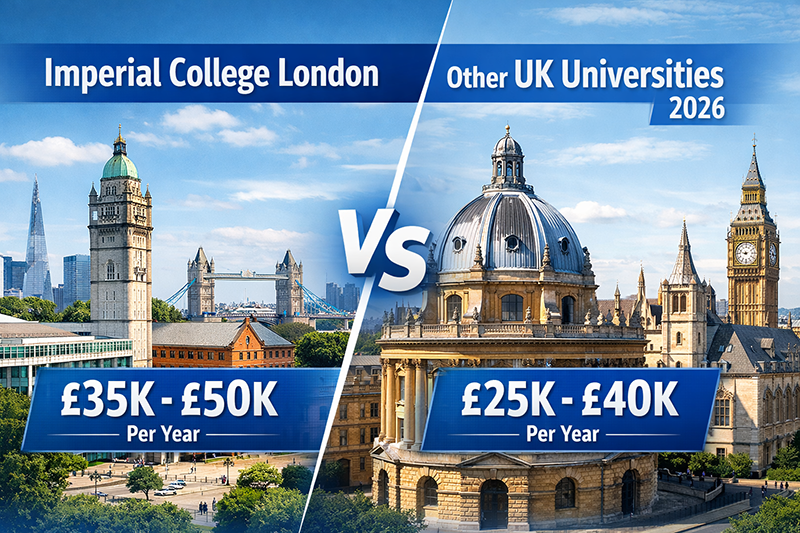
Understanding tuition fees is one of the most important steps when choosing a UK university. In this guide, we break down the cost of studying at Imperial College London and compare it with other leading UK institutions such as the University of Oxford, University of Cambridge, UCL, and King’s College London.
This article provides a full breakdown of tuition fees, living costs, scholarships, and ROI (return on investment), helping international and domestic students make informed decisions.
Table of Contents
- Overview of UK University Tuition Fees
- Imperial College London Tuition Breakdown
- Tuition Comparison with Top UK Universities
- Cost of Living in London vs Other Cities
- Scholarships and Financial Aid
- Is Imperial College Worth the Tuition?
- ROI and Graduate Salary Potential
- FAQs
- Conclusion
Overview of UK University Tuition Fees
UK university tuition fees vary based on:
- Student status (UK, EU, International)
- Degree level (Undergraduate, Postgraduate)
- Subject area (STEM vs Humanities)
- University ranking and prestige
Top-tier universities such as Imperial College London and the University of Cambridge generally charge higher tuition, especially for international students, due to research intensity and global reputation.
Imperial College London Tuition Breakdown
At Imperial College London, tuition fees differ depending on the program and level of study.
Undergraduate Tuition (2026 Estimate)
| Program Type | UK Students | International Students |
|---|---|---|
| Engineering | £9,250/year | £35,000 – £40,000/year |
| Computer Science | £9,250/year | £38,000 – £45,000/year |
| Medicine | £9,250/year | £45,000 – £50,000/year |
| Natural Sciences | £9,250/year | £35,000 – £42,000/year |
Postgraduate Tuition (2026 Estimate)
| Program Type | Tuition Range |
|---|---|
| MSc Engineering | £30,000 – £42,000 |
| MSc Data Science | £35,000 – £45,000 |
| MBA | £60,000 – £75,000 |
| MSc Finance | £40,000 – £55,000 |
Tuition Comparison: Imperial vs Other UK Universities
Below is a comparison of tuition fees for international students in STEM-related programs.
| University | Average Tuition (International) | Global Ranking Strength |
|---|---|---|
| Imperial College London | £35,000 – £45,000 | Very High (STEM-focused) |
| University of Oxford | £30,000 – £52,000 | Extremely High |
| University of Cambridge | £33,000 – £55,000 | Extremely High |
| UCL (University College London) | £25,000 – £40,000 | Very High |
| King’s College London | £28,000 – £45,000 | High |
Key Insight:
Imperial is among the most expensive UK universities, but its STEM programs often deliver higher salary outcomes post-graduation.
Cost of Living in London vs Other UK Cities
Studying in London significantly increases total expenses.
Monthly Living Costs (Average Student Budget)
| Expense Category | London | Other UK Cities |
|---|---|---|
| Accommodation | £900 – £1,600 | £500 – £900 |
| Food | £250 – £400 | £200 – £350 |
| Transport | £100 – £180 | £40 – £100 |
| Personal Expenses | £150 – £300 | £100 – £250 |
Annual Living Cost Estimate:
- London: £15,000 – £22,000
- Other cities: £10,000 – £15,000
Why Imperial College London Is More Expensive
Several factors contribute to higher tuition:
1. Global Reputation
Imperial is consistently ranked among the top 10 universities worldwide.
2. STEM Focus
Engineering, medicine, and data science programs require advanced labs and research facilities.
3. London Location
Operating costs in London are significantly higher than in other UK cities.
4. Research Investment
Heavy funding goes into cutting-edge scientific research and innovation.
Scholarships and Financial Aid
Students can reduce costs through:
- Imperial Excellence Scholarships
- President’s Undergraduate Scholarships
- Commonwealth Scholarships
- Chevening Scholarships (postgraduate)
- External funding bodies
Tip:
International students should apply early, as many scholarships are highly competitive.
Is Imperial College London Worth the Tuition?
From a financial perspective, the value depends on career goals.
Advantages:
- Strong global reputation
- High employability rate
- Excellent STEM research opportunities
- Strong industry connections (tech, engineering, finance)
Disadvantages:
- High tuition fees
- Expensive living costs in London
- Competitive academic environment
Verdict:
For STEM students aiming for high-paying global careers, Imperial College London is often considered a strong ROI investment.
Graduate Salary and ROI
Graduates from Imperial typically earn strong starting salaries:
| Field | Average Starting Salary |
|---|---|
| Computer Science | £45,000 – £75,000 |
| Engineering | £40,000 – £65,000 |
| Finance | £50,000 – £90,000 |
| Data Science | £55,000 – £85,000 |
ROI Insight:
Many students recover tuition costs within 3–7 years after graduation, especially in tech and finance roles.
Comparison Summary
- Cheapest option: UCL or King’s College London
- Most prestigious STEM: Imperial College London
- Highest variability: Oxford and Cambridge (depending on course)
- Lowest living cost cities: Manchester, Birmingham, Leeds
FAQs
1. How much is Imperial College London tuition in 2026?
International undergraduate fees range from £35,000 to £50,000 per year depending on the course.
2. Is Imperial College London more expensive than Oxford?
They are similar, but Imperial is often slightly more expensive for STEM subjects.
3. Can international students get scholarships?
Yes, but they are highly competitive and limited.
4. What is the cheapest UK university in this list?
UCL and King’s College London tend to have slightly lower tuition than Imperial.
5. Is living in London worth it for students?
It depends on career goals—London offers better internships and job opportunities.
Conclusion
Tuition at Imperial College London is among the highest in the UK, but it reflects world-class teaching, research facilities, and strong graduate outcomes. If you need Imperial College London degree online, we are your good partner. When compared to other top UK universities, Imperial stands out as a premium choice for STEM-focused students seeking global career opportunities.
If budget allows, the long-term ROI often justifies the investment—especially in engineering, computer science, and finance.