
The University of Michigan is widely recognized as one of the top public universities in the United States, known for academic excellence, strong alumni networks, and high post-graduation earning potential. For students and parents evaluating return on investment (ROI), one of the most important questions is:
How much do University of Michigan graduates actually earn in 2026?
This guide breaks down University of Michigan salary data, including average earnings by degree level, major, industry, and job role—along with comparisons to other top universities.
Quick Overview: University of Michigan Graduate Salary (2026)
Graduates from University of Michigan consistently report strong earning outcomes across all disciplines.
Average Salary Snapshot
| Degree Level | Average Starting Salary | Mid-Career Salary |
|---|---|---|
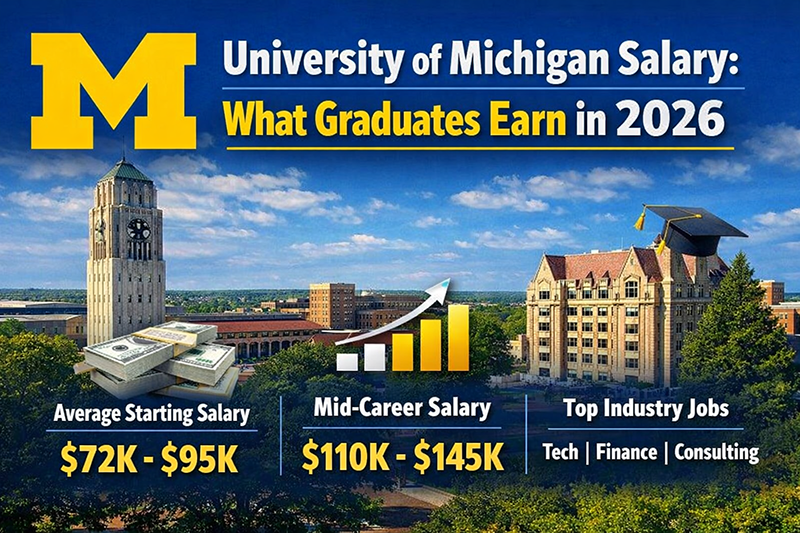
| Bachelor’s Degree | $72,000 – $95,000 | $110,000 – $145,000 |
| Master’s Degree | $85,000 – $120,000 | $130,000 – $170,000 |
| MBA (Ross School of Business) | $125,000 – $160,000 | $180,000 – $250,000 |
| PhD | $95,000 – $140,000 | $140,000 – $200,000 |
Key Insight: Michigan graduates typically earn 20–40% above the U.S. national average salary.
Why University of Michigan Graduates Earn High Salaries
Several factors contribute to strong salary outcomes:
1. Elite Academic Reputation
The University of Michigan is consistently ranked among the top public universities in the U.S., especially strong in engineering, business, and computer science.
2. Strong Employer Network
Top employers actively recruit Michigan students, including:
- Amazon
- Microsoft
- Deloitte
- Goldman Sachs
- Meta
3. High-ROI Majors
Engineering, business, and STEM fields dominate salary outcomes.
4. Internship Opportunities
Over 90% of students complete internships before graduation, improving job placement and salary negotiation.
Salary by Major at University of Michigan (2026)
One of the biggest determinants of salary is field of study.
Top-Paying Majors
| Major | Average Starting Salary | Mid-Career Salary |
|---|---|---|
| Computer Science | $105,000 – $135,000 | $150,000 – $220,000 |
| Computer Engineering | $100,000 – $130,000 | $145,000 – $210,000 |
| Electrical Engineering | $95,000 – $125,000 | $140,000 – $200,000 |
| Mechanical Engineering | $85,000 – $110,000 | $120,000 – $170,000 |
| Data Science | $100,000 – $140,000 | $150,000 – $230,000 |
| Finance (Ross) | $90,000 – $120,000 | $140,000 – $200,000 |
| Economics | $75,000 – $105,000 | $120,000 – $180,000 |
| Nursing | $70,000 – $95,000 | $100,000 – $140,000 |
Key Takeaway:
STEM majors consistently outperform humanities in starting salary, but business majors from Ross School of Business also achieve top-tier compensation.
Salary by Industry (University of Michigan Graduates)
Different industries pay very differently, even for the same degree.
| Industry | Average Entry Salary | Mid-Career Salary |
|---|---|---|
| Tech | $110,000 | $180,000+ |
| Finance | $95,000 | $170,000 – $250,000 |
| Consulting | $90,000 | $160,000 – $220,000 |
| Healthcare | $75,000 | $120,000 – $160,000 |
| Education | $55,000 | $80,000 – $110,000 |
| Government/Public Policy | $60,000 | $95,000 – $130,000 |
Insight:
Tech and finance remain the highest-paying sectors for Michigan graduates.
Ross School of Business Salary Insights
The Ross School of Business is one of the strongest MBA and undergraduate business programs in the U.S.
Graduates typically land roles in:
- Investment Banking
- Management Consulting
- Private Equity
- Corporate Finance
MBA Salary Breakdown
| Role | Average Base Salary | Bonus |
|---|---|---|
| Investment Banking | $175,000 | $50,000 – $120,000 |
| Consulting (MBB) | $165,000 | $30,000 – $70,000 |
| Tech Product Manager | $150,000 | $40,000 – $100,000 |
| Corporate Strategy | $140,000 | $20,000 – $60,000 |
Insight: Ross MBA graduates often achieve 6-figure bonuses, significantly boosting total compensation.
Salary Growth Over Time (Career Progression)
University of Michigan alumni show strong salary growth over time.
Typical Progression Timeline
| Years After Graduation | Average Salary |
|---|---|
| 0–2 years | $70,000 – $100,000 |
| 3–5 years | $95,000 – $140,000 |
| 6–10 years | $130,000 – $180,000 |
| 10+ years | $160,000 – $250,000+ |
Key Insight:
The biggest salary jump typically occurs between years 3–7, especially for STEM and business graduates.
University of Michigan Salary vs Other Top Universities
How does Michigan compare to peer institutions?
| University | Average Starting Salary |
|---|---|
| University of Michigan | $72K – $95K |
| UC Berkeley | $80K – $105K |
| UCLA | $70K – $95K |
| University of Virginia | $75K – $100K |
| Northwestern University | $85K – $110K |
| Stanford University | $100K – $140K |
Conclusion:
- Michigan performs strongly among public universities
- Slightly lower than elite private schools like Stanford
- Comparable to top-tier institutions like UVA and UCLA
ROI: Is a University of Michigan Degree Worth It?
Estimated Costs (4 Years)
| Category | Cost |
|---|---|
| Tuition (in-state) | $60,000 – $75,000 total |
| Tuition (out-of-state) | $180,000 – $220,000 total |
| Living expenses | $50,000 – $70,000 |
ROI Summary
- Average starting salary: ~$80,000
- Payback period (in-state): ~1–3 years
- Payback period (out-of-state): ~3–6 years
Conclusion: A Michigan degree offers very strong ROI, especially for STEM and business students.
Factors That Affect Salary After Graduation
Even within the same university, salaries vary widely based on:
1. Internship Experience
Students with internships earn 10–30% more.
2. Location
Graduates in:
- San Francisco
- New York
- Seattle
tend to earn significantly more.
3. GPA and Academic Performance
Higher GPA often correlates with:
- Better job offers
- Higher starting salary
4. Networking
Michigan’s alumni network is one of its strongest assets.
FAQ: University of Michigan Salary (2026)
1. What is the average salary for University of Michigan graduates?
Most graduates earn between $72,000 and $95,000 starting salary, depending on major.
2. Which majors earn the highest salaries?
Computer Science, Data Science, Engineering, and Business (Ross) are the highest-paying.
3. Do Michigan graduates get high-paying jobs?
Yes. Many enter tech, finance, and consulting, with six-figure starting packages.
4. Is University of Michigan worth it for salary?
Yes, especially for STEM and business majors, due to strong ROI and job placement.
5. How does Michigan compare to Ivy League salaries?
Ivy League schools may have slightly higher averages, but Michigan remains highly competitive.
Final Thoughts
The University of Michigan salary outcomes in 2026 demonstrate strong earning potential across multiple industries. While STEM and business fields lead in compensation, nearly all graduates benefit from the university’s reputation, alumni network, and employer connections.
For students considering ROI, the University of Michigan remains one of the best public university investments in the United States. If you lost your University of Michigan diploma for some reasons, we can help you online.